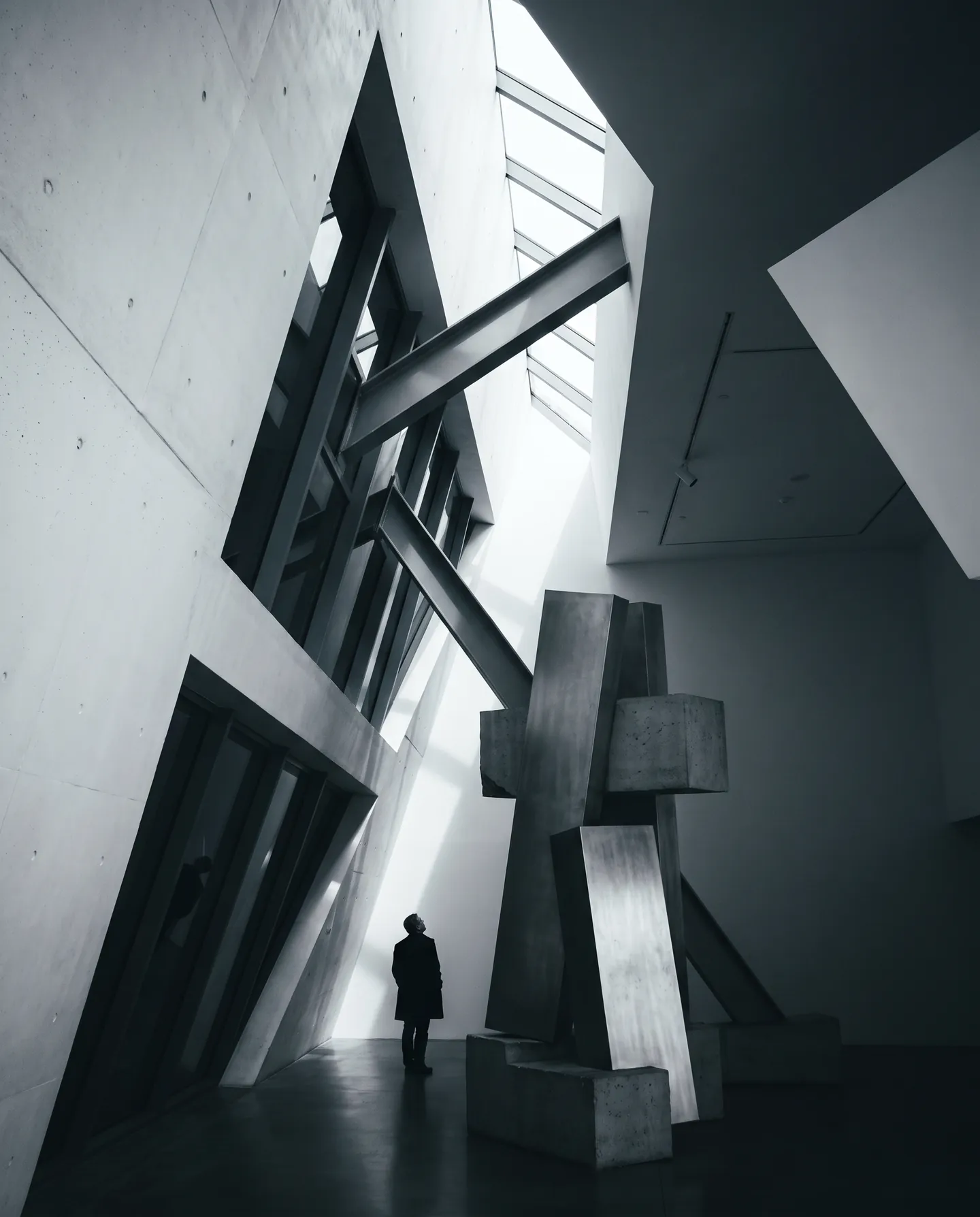
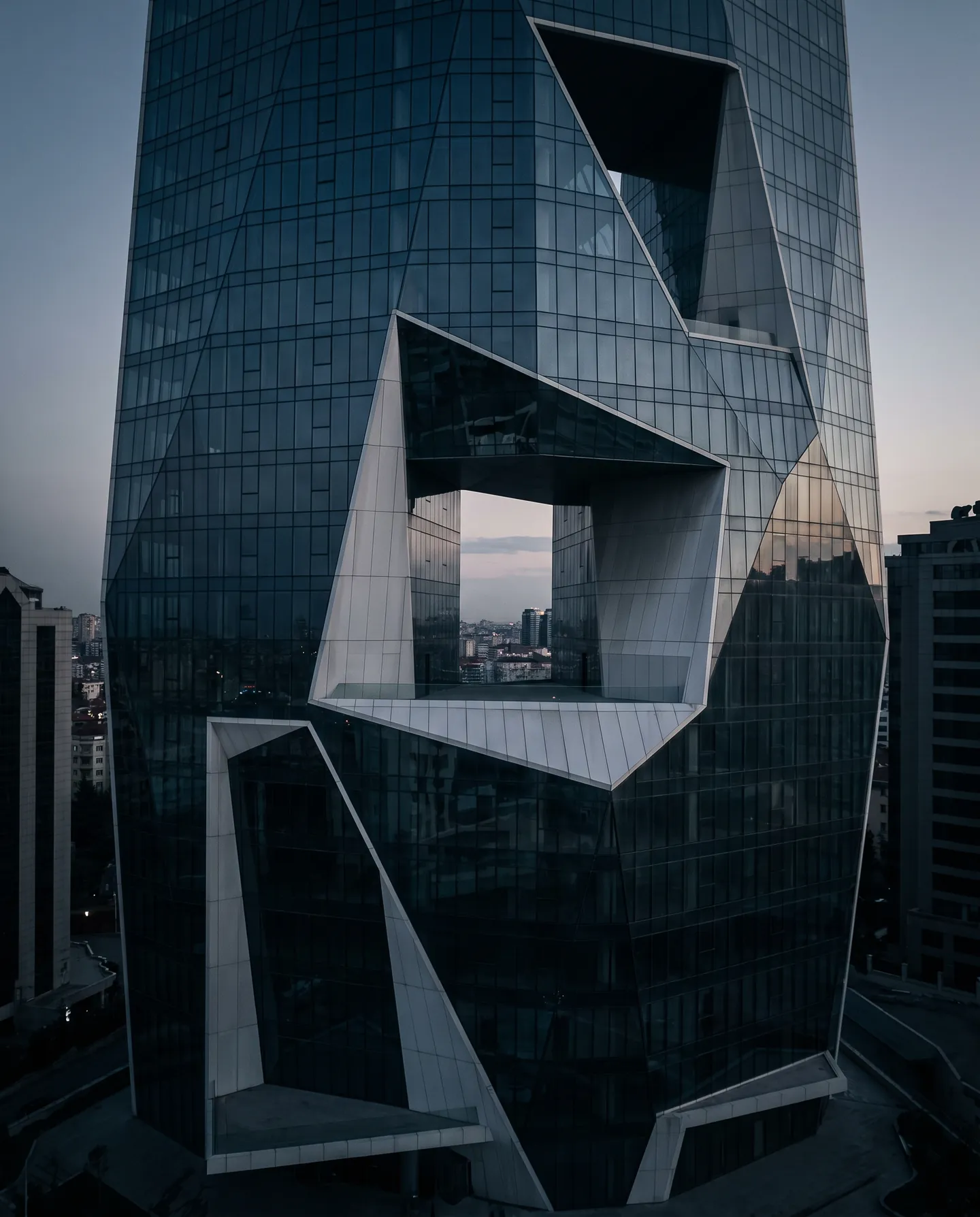
Negative space: the designed void
Architecture usually deals with what is full. We start with what is empty: courtyard, slit, hole and the air between.
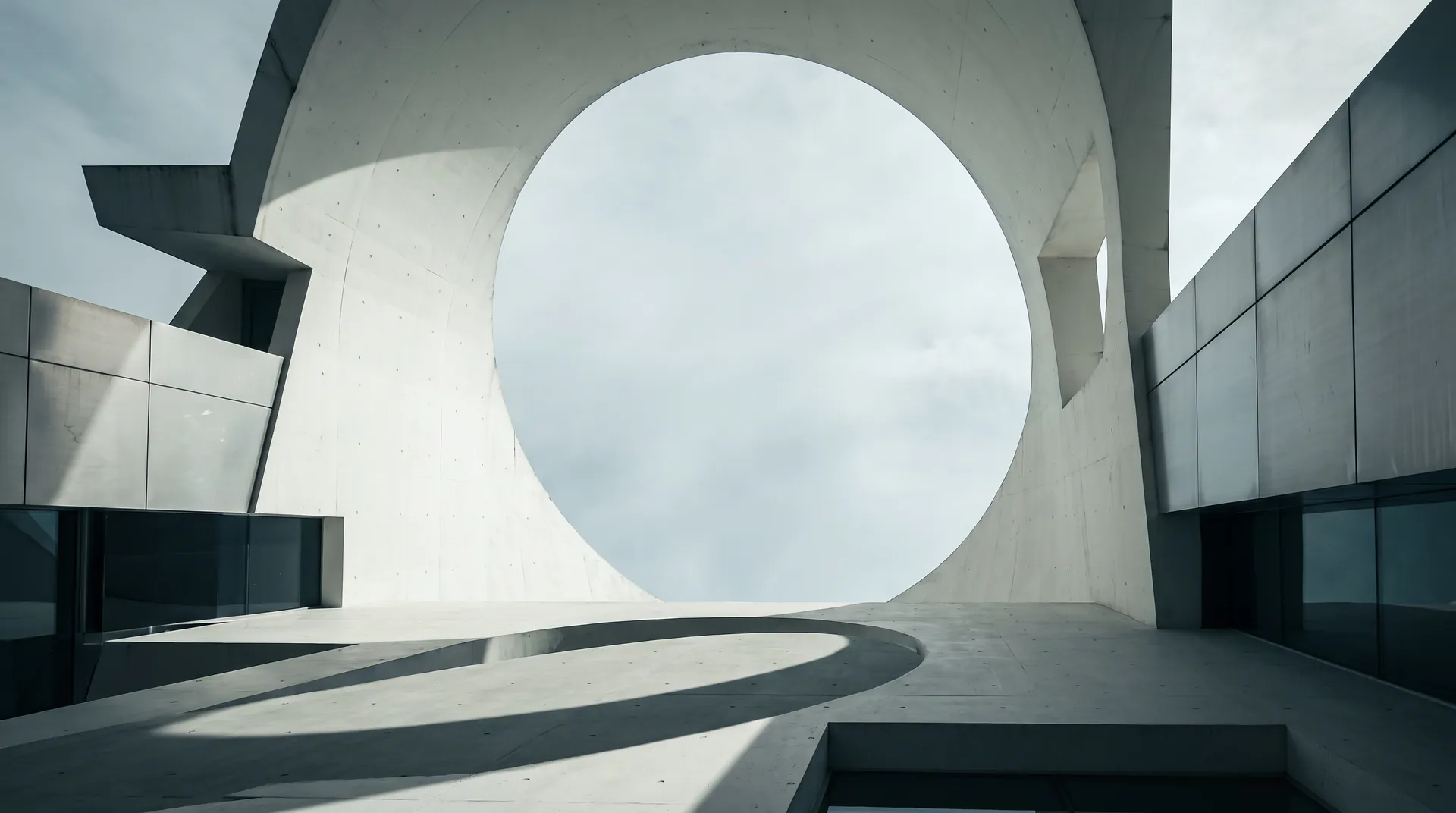
Drawing the mass of a building is easy. The hard part is deciding what to take out of it.
The void is not a programme
Spaces that are never let, never sold and have no name often become the most lived-in parts of a building: like the six-storey void in Crystal Tower or the circular courtyard of Tech Hub.
The void changes its surroundings
A hole directs wind, carries light deep inside and frames a view. The void is not passive; it actively redefines what surrounds it.
It takes courage
Bringing a client a proposal that loses floor area takes courage. But a good void gives back more than it takes.